When Preservation Becomes Unsustainable: A Municipal Arborist's Responsibility
Municipal arborists are often asked whether a tree can be saved. The harder question is whether it should be saved when preservation requires permanent life support.
Kyle D. Peczkowski
Board Certified Master Arborist & Urban Forester
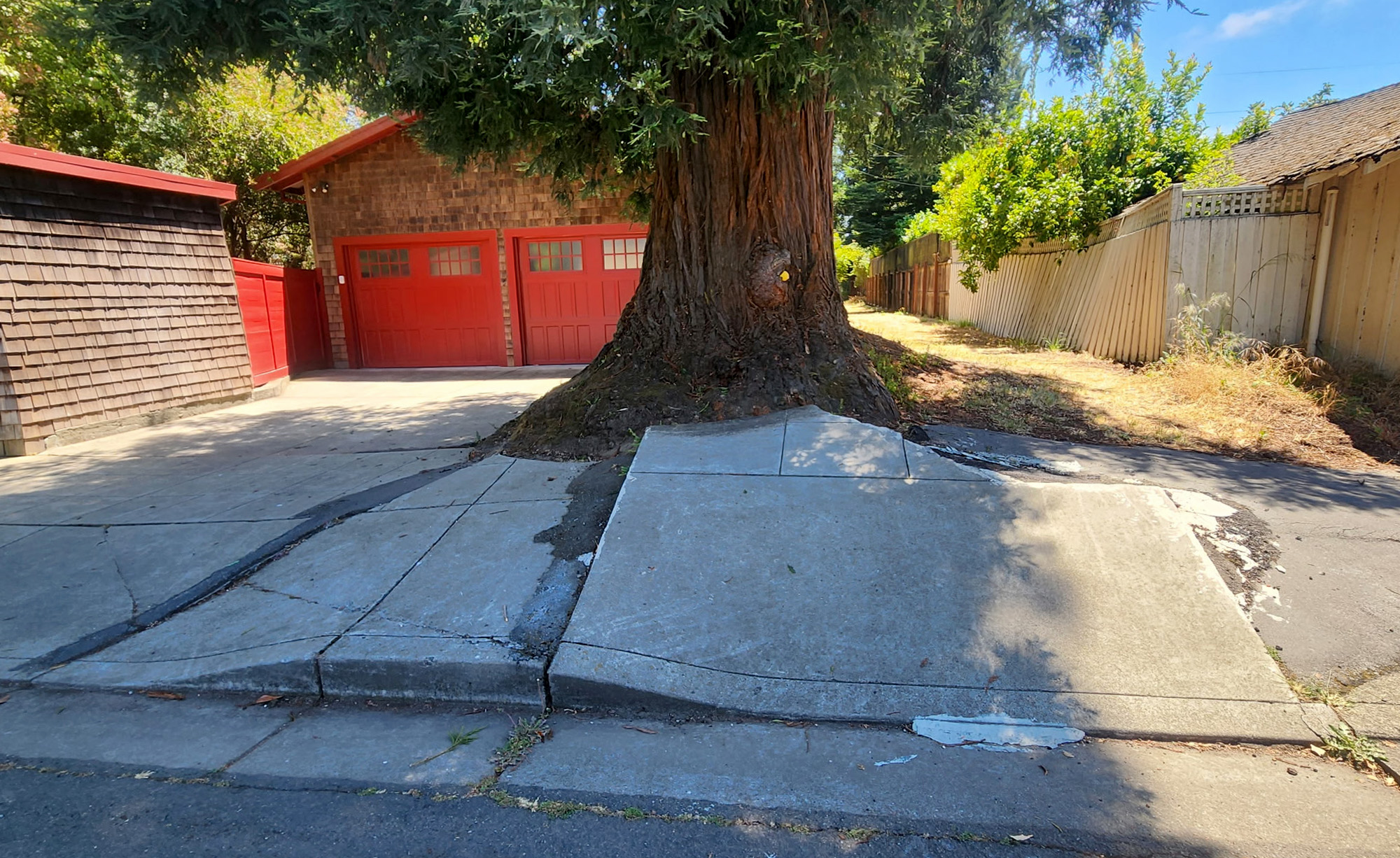
Municipal arborists are often asked one question: Can this tree be saved? The more important question is: Should it be saved, and at what cost?
The responsibility of a municipal arborist is not to preserve every individual tree indefinitely. It is to steward an entire urban forest in a manner that is environmentally sustainable, fiscally responsible, and scientifically defensible. Sometimes those responsibilities align with preserving an individual tree. Sometimes they do not.
This dilemma is particularly evident with coast redwoods planted outside their native range. A 75 year old redwood may appear mature to the public, but biologically it is only beginning its life. In a natural coastal environment, a healthy redwood can live for two to three millennia. When such a tree begins declining at only 75 years because it lacks the climate, fog, and soil conditions it evolved with, the issue is no longer whether it can survive today. The issue is whether it can ever become self sustaining.
If the only way to maintain that tree is through permanent irrigation systems, supplemental watering, canopy misting, repeated pruning, root zone modifications, sidewalk repairs, and continual monitoring, then the municipality has effectively placed the tree on permanent life support. The intervention is no longer temporary. It becomes the management strategy itself.
Unlike rehabilitation following a drought or construction damage, there is no realistic point at which those extraordinary inputs can simply stop. The environmental limitations of the site do not disappear. If the tree survives, it survives because people continually replace the ecological conditions that nature cannot provide.
Contrast that with a 400 or 500 year old native oak or another long lived heritage tree nearing the latter portion of its natural lifespan. Providing supplemental care that extends its life by several decades may be an appropriate investment because the commitment is finite and the tree represents centuries of established ecological value. The goal is to help an already successful tree complete the final chapter of its life, not to indefinitely replace the ecosystem it requires.
This distinction is critical. One management strategy extends the natural life of an established tree. The other substitutes for an environment the tree will never have.
Public attachment to landmark trees is understandable and deserves respect. A redwood planted during a community celebration can become part of a city's identity. However, emotional value cannot be the sole criterion for municipal policy. Public agencies have an obligation to consider water use, maintenance costs, infrastructure damage, ecological function, public safety, and the opportunity cost of investing limited resources into a single declining tree rather than the health of the urban forest as a whole.
Professional ethics also require action. Arborists cannot knowingly allow a declining tree to deteriorate through neglect. If intervention is justified, it should be undertaken diligently. But when the only available intervention is indefinite life support with no realistic expectation that the tree will ever become self sustaining, continued treatment may no longer represent responsible stewardship. In those circumstances, removal is not a failure of arboriculture. It is an acknowledgment that the site is fundamentally incompatible with the species.
Municipalities should therefore adopt objective policies establishing measurable thresholds for continued intervention. When a tree reaches the point where extraordinary, permanent inputs are required to sustain life, while ecological returns diminish and public costs continue to increase, removal becomes a responsible management decision. Such policies provide transparency to the public, consistency for decision makers, and professional support for arborists charged with making difficult choices.
The role of a municipal arborist is not to keep every tree alive at all costs. It is to ensure that limited public resources are invested where they produce the greatest long term environmental benefit. Stewardship sometimes means preserving a remarkable tree. It also sometimes means recognizing that the greatest service to the urban forest is to remove one tree so that many others may thrive.