Tussoc Moths: Looking Beyond the Outbreak
A tussock moth outbreak looks alarming, but panic is not a management plan. A forester's case for reading the defoliation, the tree, and the landscape before reaching for a solution.
Kyle D. Peczkowski
Board Certified Master Arborist & Urban Forester
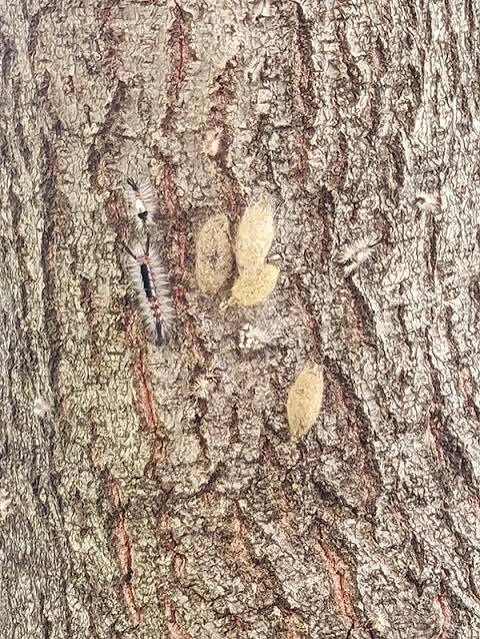
When the calls start coming in, they all sound the same. Homeowners have found their oak covered in caterpillars. The leaves are gone or going. The trunk is crawling. There are clumps of white hair and the unmistakable tufts that give the tussock moth its name, and people are frightened. The first question is always the same: what do we spray.
I understand the instinct. A defoliated oak in May looks like it is dying. But most of the time, it is not. Tussock moths, and the western tussock moth in particular, are native defoliators that have been part of California oak woodlands far longer than we have. Outbreaks are episodic, they are dramatic, and they almost always collapse on their own. Viruses, predators, and starvation do the work that a pesticide only pretends to do, and they do it without the collateral damage.
That does not mean we do nothing. It means we look before we act. Integrated pest management begins with monitoring, and monitoring is what tells you whether an outbreak is a threat to the tree or simply a spectacle. A healthy mature oak can absorb a full defoliation in a single season and reflush the same summer. The carbohydrates stored in its roots are the real canopy, and a single year of caterpillars rarely touches them. The risk is not the defoliation itself but the compounding: a tree already stressed by drought, compaction, or root loss that gets defoliated on top of it.
So the assessment is never just about the moth. It is about the tree. How much crown is affected? Is the tree already in decline? Is there bark beetle activity at the trunk? Has the site been disturbed? A vigorous oak on an undisturbed site can be left alone with confidence. A compromised oak on a stressed site may need help, and even then the help is rarely a broadcast spray.
When intervention is warranted, it should be targeted. Bacillus thuringiensis, applied early when larvae are small, can reduce feeding with minimal off-target effects. Broadcasting broad-spectrum insecticides across a canopy is the opposite of IPM. It kills the parasitoids and predators that would have ended the outbreak naturally, and it sets up the next one. I have walked sites where the worst outbreaks followed the most aggressive spraying, because the natural enemies never came back.
There is also a public education piece that too many agencies skip. A resident who understands that the outbreak will pass is a resident who does not call the contractor with the sprayer. The time spent explaining native defoliators, stored reserves, and the role of natural enemies is cheaper and more durable than any treatment, and it builds the kind of trust that pays off when a real emergency arrives.
Looking beyond the outbreak means remembering that the forest has been managing these insects for a very long time. Our job is rarely to take over. It is to read the situation, protect the trees that genuinely need protecting, and let the system do what it already knows how to do. The outbreak is the headline. The health of the tree and the balance of the landscape are the story.