The Quiet Work of Mulch: Protecting the Living Space Beneath Our Trees
No intervention in urban forestry delivers more return per dollar than a properly applied ring of arborist chip mulch. Yet mulch is not decoration around a tree — it is an extension of the tree’s growing environment.
Kyle D. Peczkowski
Board Certified Master Arborist & Urban Forester
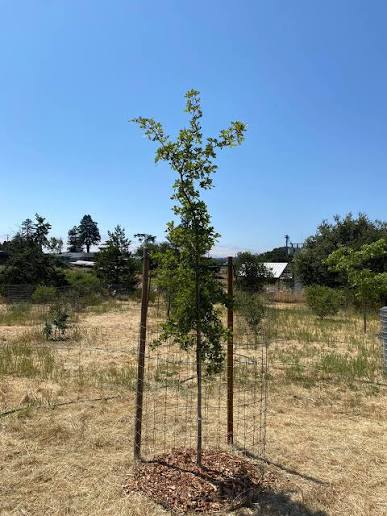
No intervention in urban forestry delivers more return per dollar than a properly applied ring of arborist chip mulch. Yet one of the simplest and most effective practices in tree care remains misunderstood: mulch is not decoration around a tree. It is an extension of the tree’s growing environment, and it should extend outward toward the tree’s drip line, the area beneath the outer reach of the branches where rainfall naturally falls from the canopy.
The drip line should be treated as a protected zone. In a healthy landscape, this area is not empty space waiting for turfgrass, landscape fabric, or maintenance equipment. It is part of the tree’s living system. Many of a tree’s most important absorbing roots are found in the upper layers of soil extending outward from the trunk, often far beyond what people imagine as the “base” of the tree. Protecting this zone protects the foundation of the tree itself.
The International Society of Arboriculture recommends the use of organic mulch around trees because it reduces competition from turfgrass, conserves soil moisture, moderates soil temperatures, and improves soil conditions when applied correctly.
When county parks and public landscapes allow turfgrass to grow directly beneath trees, they create a conflict between maintenance practices and tree health. Mowers are often pushed closer to trunks to maintain a clean appearance, but the area beneath the canopy should not be treated as a lawn. Repeated mowing and string trimming near trees can damage bark, compact soil, and injure roots.
This maintenance approach also influences pruning decisions. Lower limbs are frequently removed because they interfere with mowing operations, not because the tree requires their removal. Over time, trees can lose their natural architecture as branches are cut away to accommodate equipment. Good pruning is based on tree health, structure, and long term objectives, not on making every square foot accessible to a mower.
The drip line should be considered a sacred space for the tree. A properly designed mulch ring extending outward toward the drip line creates a natural boundary that protects both the tree and the people maintaining the landscape. It tells maintenance crews that this is not a place for mowing. It is a place for roots.
The Problem With Landscape Fabric
Unfortunately, many landscapes replace healthy organic mulch systems with synthetic landscape fabric. This approach often appears to reduce maintenance, but it works against the principles of a living landscape.
Synthetic landscape fabric is a barrier, not a soil building practice. It separates the soil surface from the natural processes that create healthy ecosystems. While some temporary fabrics may have appropriate uses, such as short term erosion control, permanent plastic weed barriers beneath ornamental landscapes often create long term problems.
Over time, synthetic fabrics can deteriorate through exposure to sunlight, temperature changes, soil movement, and maintenance activities. As they break down, they can contribute plastic fragments to the soil environment. Research has documented the persistence of microplastics in soils and the potential for these materials to affect soil organisms and ecological processes.
Landscape fabric also does not eliminate weeds. It often delays and changes the problem. Organic debris, dust, leaves, and plant material accumulate above the fabric, creating a thin growing layer where windblown and bird dispersed seeds can establish. Instead of preventing future weeds, the fabric can become a temporary separation layer with a developing seed bank above it.
Another overlooked issue is soil temperature. Many fabric installations are paired with exposed rock or gravel mulch, materials that absorb and radiate heat. These hotter conditions can create a less favorable environment for soil biology. Healthy soils depend on complex communities of organisms, including fungi, bacteria, insects, and earthworms, that contribute to nutrient cycling and soil structure.
Research on organic mulches has shown that properly applied wood chips and other natural materials can improve soil conditions while supporting healthier plant growth. Unlike synthetic barriers, organic mulch becomes part of the soil system, gradually returning nutrients and organic matter as it decomposes.
The goal of sustainable landscaping should not be to create a sterile surface that separates plants from soil. The goal should be to build a living system where soil, roots, fungi, microorganisms, and plants work together.
Arborist chip mulch is not simply a finishing touch. It is a tool for protecting trees, reducing unnecessary pruning, preventing mechanical damage, and restoring some of the conditions trees evolved with in natural forests.
When Parks managers extend mulch to the drip line and protect that area from mowers, they are making a statement about priorities. Trees are not obstacles placed within a lawn. They are living infrastructure that deserves a landscape designed around their needs.
The quiet work of mulch is ultimately the work of preservation.
References
International Society of Arboriculture. Proper Mulching Techniques.
ANSI A300. Tree, Shrub, and Other Woody Plant Management Standards.
Chalker Scott, Linda. 2007. “Impact of Mulches on Landscape Plants and the Environment.” Journal of Environmental Horticulture.
de Souza Machado, A. A., et al. 2018. “Microplastics as an Emerging Threat to Terrestrial Ecosystems.” Global Change Biology.
Gilman, Edward F. An Illustrated Guide to Pruning. University of Florida.