The Limits of a Tree Ordinance
Every jurisdiction wants a stronger heritage tree ordinance. Very few can enforce the one they already have. A note on the gap between policy and practice.
Kyle D. Peczkowski
Board Certified Master Arborist & Urban Forester
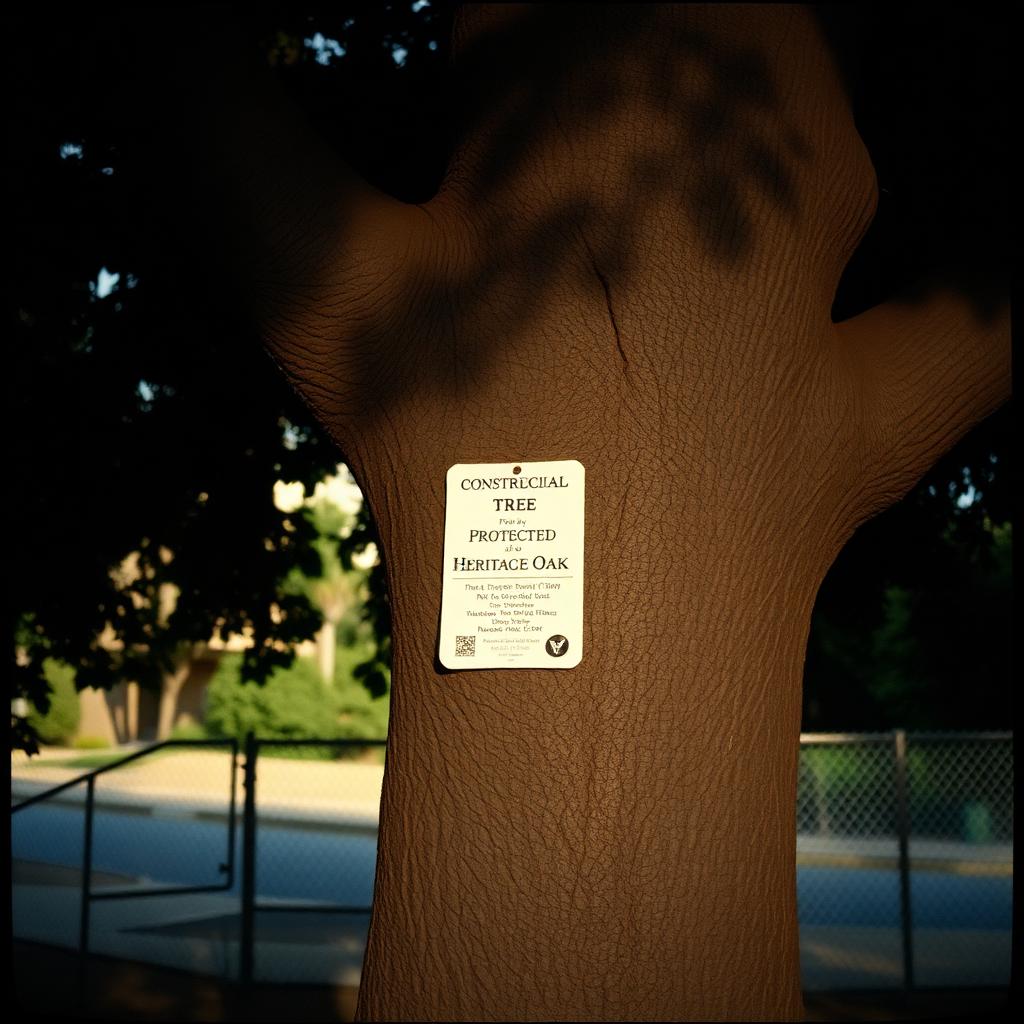
I have read a lot of tree ordinances. Most of them are good on paper. They protect specimens above a certain size, require permits for removal, mandate replacement ratios, and impose fines for unpermitted work. On paper, the canopy should be safe.
In practice, enforcement is where every ordinance breaks. A protected tree removed without a permit becomes a code enforcement case. Code enforcement is under-resourced almost everywhere. The fine, when it lands, is often smaller than the cost of the removal contract, which means the ordinance functions as a price list rather than a deterrent.
The jurisdictions where tree ordinances actually work share three features. First, they publish protected-tree removals as a public dataset, so neighbors see what is happening. Second, they tie replacement obligations to a bond that is not released until the replacement trees survive the third summer. Third, they treat repeat violators — usually the same three or four contractors — as a compliance problem, not a paperwork problem.
Writing a stronger ordinance without funding the enforcement is a way to feel good without accomplishing anything. I would rather have a modest ordinance that is actually enforced than a bold one that is not.
The trees do not care what the code says. They only respond to what actually happens on the ground.