The Forest That Doesn't Know City Limits
A ridgeline of oak woodland does not stop where a jurisdiction does. Everything hard about urban forestry in California follows from that one fact — and every real solution requires more than one agency to admit it.
Kyle D. Peczkowski
Board Certified Master Arborist & Urban Forester
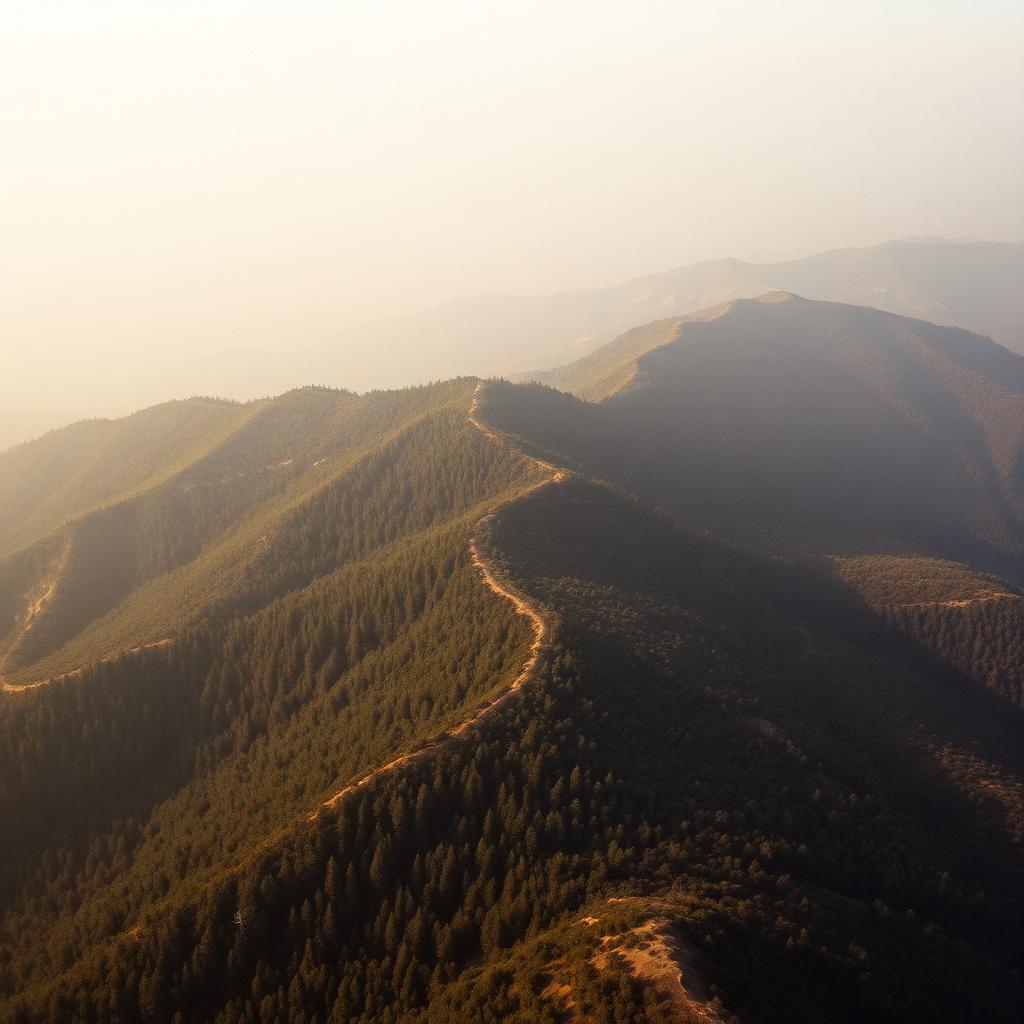
The forest does not know that it is standing in San José, or Campbell, or unincorporated county, or a Cal Fire State Responsibility Area. It does not read parcel maps. Fire moves through it, water moves through it, seeds move through it, and pests move through it without ever checking whose budget line is supposed to pay for the response.
Almost every hard problem in urban forestry in California is a version of this fact. A shot hole borer outbreak begins in a nursery in one city, moves through street trees in a second, and reaches a heritage oak grove in the unincorporated hills — three jurisdictions, three budgets, three approval processes, one insect on one timeline that does not care.
The instinct of government is to solve this with a Memorandum of Understanding, sign it at a photo op, and file it. In practice, the MOU rarely does the work. What does the work is the standing relationships between the practitioners — the county entomologist who has the personal cell number of the city urban forester, who knows the district ranger, who knows the water district biologist. When the outbreak comes, those relationships route information in hours instead of quarters.
The policy question, then, is how to build institutions that create and protect those relationships rather than exhausting them. Standing regional working groups. Shared inventories. Cross-jurisdictional monitoring transects. A single, published contact list. Small things, cheap things, and yet consistently the first line items cut when a budget tightens.
The forest that doesn't know city limits is not a poetic phrase. It is an operational description of the landscape we are supposed to manage, and every plan we write that assumes otherwise will fail on contact with the first shared boundary.