My Experience as a Santa Clara County Parks Teacher Training Instructor: The Classroom Aquarium Education Program
Serving as a teacher training instructor with Santa Clara County Parks has shown me how hands-on environmental education can connect students, teachers, and families to watersheds, conservation, and the living systems that sustain us.
Kyle D. Peczkowski
Board Certified Master Arborist & Urban Forester
Serving as a teacher training instructor with Santa Clara County Parks has given me the opportunity to see firsthand how powerful hands on environmental education can be. Through the Classroom Aquarium Education Program (CAEP), I have watched educators discover new ways to connect students with nature, conservation, and the science behind healthy aquatic ecosystems.
The CAEP program, often known as Trout in the Classroom, provides students with the unique experience of raising rainbow trout or steelhead from eggs in a classroom aquarium. This process allows students to become observers, caretakers, and young environmental stewards. They learn that every stage of a fish's development depends on clean water, healthy habitats, and responsible conservation practices.
As an instructor, I learned that successful classroom aquariums require more than equipment and supplies. Teachers need confidence, support, and a strong understanding of the process. Training educators on hydrology and the watersheds in which we live and the ecological system driving these processes has shown me the importance of providing both technical knowledge and encouragement.
The program follows an exciting seasonal journey. In winter, teachers receive fertilized eggs and begin the incubation process. During the spring months, students observe hatching, growth, and development while learning about biology, ecosystems, and conservation. The program culminates with the release of fry into a CDFW approved location, giving students a meaningful connection between their classroom experience and the natural world.
One of the most rewarding parts of my role has been witnessing the partnerships that make CAEP successful. Local fly fishing organizations, conservation groups, and community volunteers provide valuable expertise and mentorship. Their involvement helps teachers and students understand that conservation is a shared responsibility.
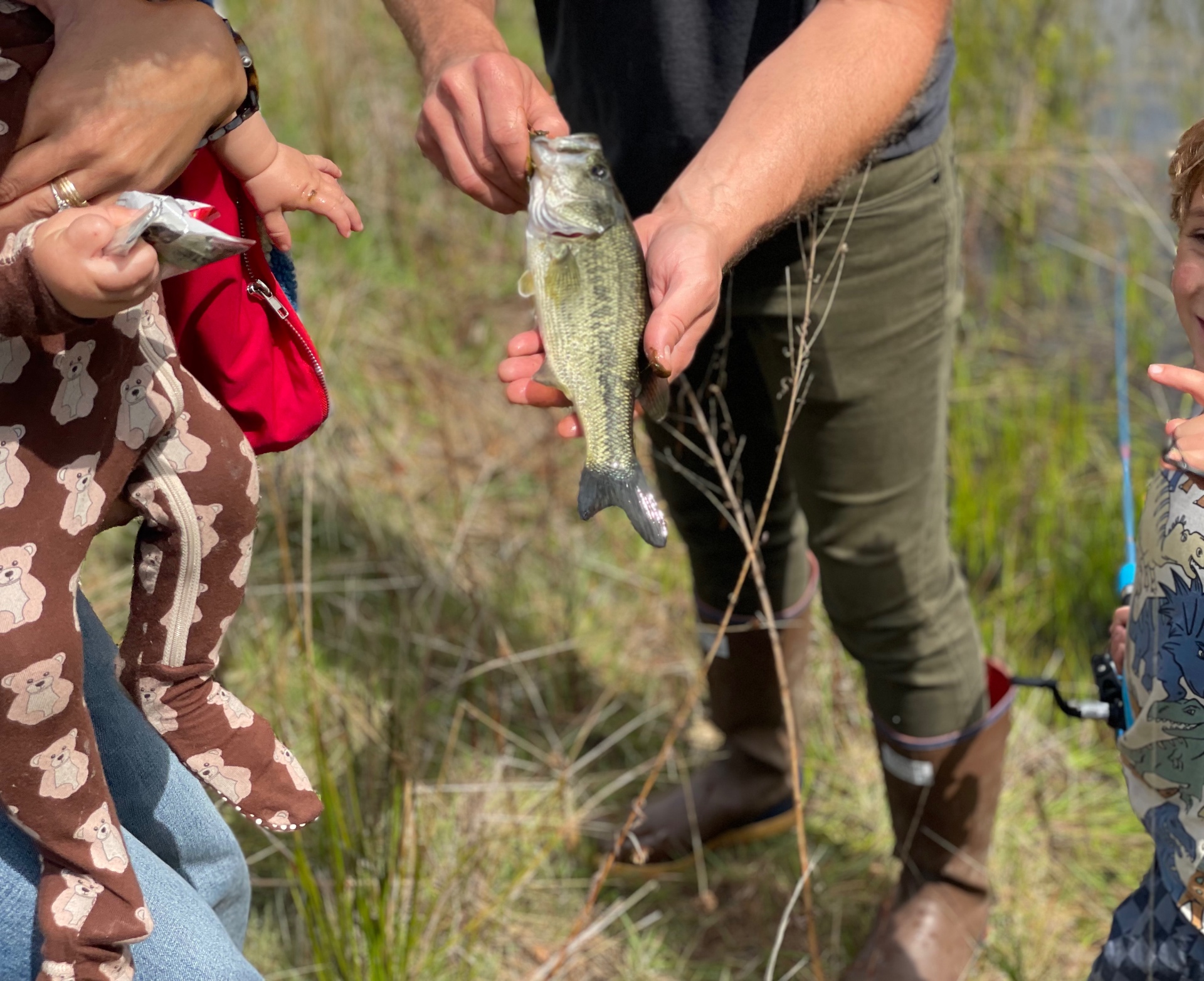
A full circle moment for me has been bringing these lessons home with my own children. Taking my seven and eight year old children fishing through Fishing in the City has allowed me to connect my work as an educator with my role as a parent. Together, we explore how our local watershed connects to the history, culture, and food systems of this region.
For generations, Indigenous peoples of the Santa Clara Valley and surrounding areas have maintained deep relationships with the land and waterways, including the streams, rivers, and lower South Bay areas that supported native fish and other resources. Learning from this history reminds us that stewardship is not a new idea. It is a responsibility that has been carried forward through generations.
Today, programs like CAEP and community fishing events help introduce young people to these same concepts: understanding our watersheds, respecting natural resources, recognizing the importance of sustainable food systems, and finding balance between people and the environment. By teaching children where their resources come from and why healthy ecosystems matter, we help build a stronger connection between future generations and the places they call home.
My experience as a CAEP instructor has reinforced my belief that environmental education is most effective when students can see, touch, observe, and participate. A classroom aquarium becomes more than a science project. It becomes a living lesson in responsibility, curiosity, and stewardship.
Through this program, I have learned that inspiring the next generation of conservationists begins with creating opportunities for meaningful connections with nature. Helping teachers bring these experiences into their classrooms, and sharing these lessons with my own family, has been one of the most rewarding aspects of my work with Santa Clara County Parks.