Planting Capital Expressway: Notes from a Former Street Median Supervisor on What Works and What Doesn’t
A former Water Conservation Horticultural Supervisor reflects on arterial planting lessons learned from six years managing street median renovation projects for the City and County of Denver and how those best management practices continue to inform urban forestry work with the County of Santa Clara.
Kyle D. Peczkowski
Board Certified Master Arborist & Urban Forester
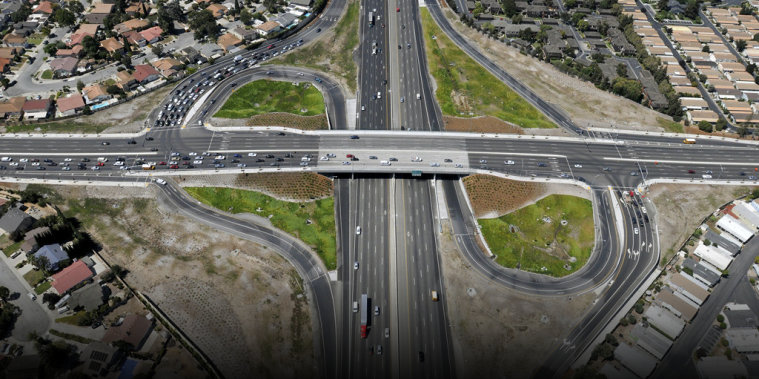
Capital Expressway is one of those corridors that thousands of people travel every day but few stop to evaluate as an urban landscape. It is a working transportation corridor shaped by pavement, traffic, utilities, and development. Yet within those constraints exists an opportunity to create healthier, cooler, and more resilient public spaces through thoughtful urban forestry.
Kyle D. Peczkowski Board Certified Master Arborist & Urban Forester
My perspective comes from six years serving as a Water Conservation Horticultural Supervisor for the City and County of Denver, where I was responsible for water conservation initiatives and the renovation and management of street medians. Those years reinforced a fundamental truth: successful arterial landscapes are not created by simply planting trees and shrubs. They are created through careful planning, appropriate design, long term maintenance, and a commitment to applying best management practices from the beginning.
The first lesson is that soil volume is everything. A street tree planted in a small cutout surrounded by compacted soil and pavement will rarely become the canopy tree envisioned during design. It may survive for several years, but it will struggle at the very time it should be providing shade, reducing heat, and contributing to the urban forest. The projects that succeeded were those that prioritized adequate rooting space, continuous planting areas, structural soil, or connected soil systems. The projects that failed were often those where minimum standards were accepted because schedules or budgets took priority over long term performance.
The second lesson is that species selection must match the reality of the site. Arterial corridors are among the harshest environments for plant material. Heat reflected from pavement, limited irrigation, compacted soils, vehicle impacts, and poor air quality create conditions that demand resilient species. The right plant must be selected for the environment it will actually experience, not simply because it looks good in a concept drawing or performs well in a different region. Successful urban forestry depends on placing the right tree in the right location.
A third lesson is the importance of the first five to eight years of establishment. This period largely determines the long term success of a street tree. A young tree requires consistent irrigation monitoring, weed management, mulch maintenance, structural pruning, and prompt replacement of failures. Trees do not become established simply because they were planted; they require active management during their formative years to develop strong roots, proper structure, and resilience. Projects that underinvest during this period often pay much higher costs later through removals, replacements, and corrective pruning.
Another important design lesson is that medians and parkways are not the same planting environment. Medians experience reflected heat from multiple directions, limited maintenance access, traffic impacts, and frequent conflicts with underground infrastructure. Parkways generally provide more forgiving conditions. Treating these areas as identical planting zones often leads to unnecessary failures. Successful projects recognize these differences and develop specifications that reflect the challenges of each location.
Utility coordination is another factor that determines success or failure. Urban corridors contain complex networks of water, sewer, gas, electric, fiber, and transportation infrastructure. Tree placement must be evaluated early in the design process, not after construction begins. A tree planted where future utility work is planned is not a maintenance failure; it is a planning failure. Strong projects bring multiple disciplines together early and maintain accurate information about existing and future infrastructure.
Irrigation design is equally critical. Traditional irrigation approaches may be inexpensive to install but costly over time. Systems that apply water inefficiently can lead to waste, inconsistent plant health, and premature decline. Water efficient systems, including properly designed drip irrigation, separate irrigation zones, and smart controllers when appropriate, provide better long term outcomes by matching water use to plant needs.
Finally, successful corridor planting requires attention to the human side of public projects. Construction affects businesses, residents, commuters, and neighborhoods. Clear communication about project goals, timelines, plant selections, and long term benefits builds public understanding and patience during the establishment phase. A successful project is not only technically sound; it is also supported by the community it serves.
The failures are often the greatest teachers. Poor species choices, inadequate soil volume, premature irrigation shutdowns, construction damage, and insufficient maintenance all provide valuable lessons for future projects. Each challenge improves the next design when agencies are willing to evaluate results honestly and adapt.
Today, as a member of the County of Santa Clara, I continue to apply the lessons learned from my time with the City and County of Denver. The principles remain consistent: plan carefully, invest early, select appropriately, coordinate across disciplines, and maintain landscapes for the long term.
Capital Expressway will always be a working roadway, but thoughtful urban forestry can help it become something more, a corridor that provides shade, improves environmental conditions, supports community character, and demonstrates the value of well planned public landscapes. Transformation happens one decision at a time: one soil trench, one species selection, one irrigation improvement, and one commitment to doing the work correctly from the beginning.