Nesting Bird Surveys Deserve Better Than Merlin: The Case for Audubon Volunteers Before Construction
Merlin is a wonderful app and a terrible pre-construction survey. Here is how partnering with local Audubon chapters can deliver real nesting bird surveys — and do right by the birds — before ground breaks.
Kyle D. Peczkowski
Board Certified Master Arborist & Urban Forester
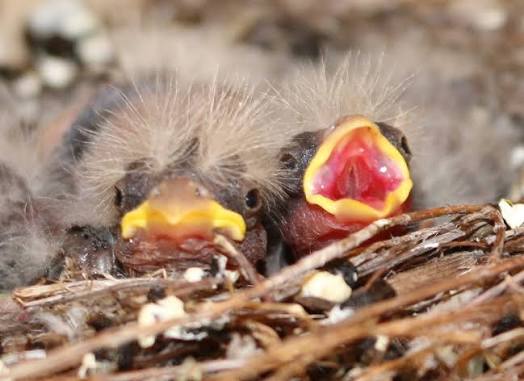
Every construction season in California, someone on a project team pulls out their phone, opens Merlin, walks a site for ten minutes, and declares the nesting bird survey complete. It is a well-meaning shortcut, and it is not a survey. Merlin is a species identification tool trained on song and image. It is not a protocol. It does not locate nests, assess active use, define buffers, or document negative findings in a way that stands up to a Migratory Bird Treaty Act or California Fish and Game Code review. Treating it as a compliance document is how projects end up with take violations, stop-work orders, and dead nestlings.
The right survey is a trained observer, walking defined transects during the appropriate time of day and season, listening and watching for territorial behavior, food-carrying, nest material transport, and fledgling activity. It takes hours per acre, not minutes. It has to be repeated close to the ground-disturbance date because nesting status changes weekly. And it has to be documented in a form that a wildlife agency will accept: a map of survey coverage, a list of species detected, evidence of breeding behavior, nest locations if any, and recommended buffers.
Most public agencies and small contractors cannot staff this internally. Consulting biologists are expensive and often booked out during the March-to-August window when every project needs them at once. That capacity gap is exactly why Merlin gets misused. And it is exactly the gap that local Audubon Society chapters are structurally equipped to fill.
Audubon volunteers are, quietly, one of the largest trained birding workforces in the country. Santa Clara Valley Audubon alone has hundreds of members who conduct Christmas Bird Counts, breeding bird atlas surveys, and long-running monitoring routes at parks and preserves. Many of them have been surveying the same square miles for decades. They know which oak has the resident Cooper's hawk. They know where the burrowing owls have been persistent. Their eyes and ears are, in many cases, better than a first-year consulting biologist's.
A County-Audubon partnership for pre-construction surveys could work like this. The County (or a partner agency) provides the protocol, the maps, the training on documentation standards, and a Qualified Biologist to sign off on the final report. Audubon provides trained volunteer observers who conduct the field surveys under that biologist's direction. Volunteers receive mileage reimbursement and, where appropriate, a stipend that goes back to the chapter's education and conservation fund. The project pays a fair fee, still lower than a full consulting contract, and the money supports local bird conservation instead of a national environmental firm's overhead.
The regulatory piece has to be handled carefully. Only a Qualified Biologist can sign the survey report and make take determinations. Volunteers are field observers, not decision-makers. But that is exactly how breeding bird atlases and shorebird monitoring programs already work: a qualified coordinator oversees a distributed network of trained volunteers whose data feeds a professionally reviewed product. The model is proven; it just has not been extended to construction compliance.
There is also a training benefit that runs both directions. Volunteers get real-world experience in regulatory-standard surveys, which strengthens their advocacy and monitoring work elsewhere. Agencies get a growing pool of local observers who understand the CEQA and MBTA context. And the birds get surveyed by people who actually care whether the burrowing owls under the culvert are still there next year — not by someone billing an hour before lunch.
The failure mode to avoid is exploitation. Volunteers are not free labor to plug a budget hole. A serious partnership pays for time, covers expenses, and treats the chapter as a co-equal program partner. It also protects volunteers from being pressured into findings they do not support; the Qualified Biologist, not the project schedule, decides whether a buffer is required.
There is one more piece that Merlin cannot replace: the moral posture of the work. A nesting bird survey is not a checkbox. It is a promise the public makes, through its laws, that we will not casually destroy the next generation of the birds we say we value. Handing that promise to an app and calling it done is a small betrayal. Handing it to a trained neighbor with binoculars and a clipboard, backed by a biologist who signs the report, is what the law actually asks for. It is also what the birds deserve before we break ground.