Why Mountain Bikes Don't Belong in Ecologically Sensitive Areas of Stewardship
Recreation access and ecological stewardship are not always compatible. In the county's most sensitive habitats, the responsible choice is to keep bikes out — and to explain why clearly.
Kyle D. Peczkowski
Board Certified Master Arborist & Urban Forester
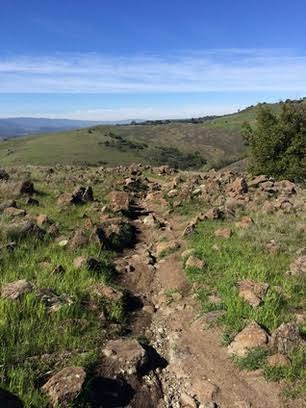
I want to start with what this argument is not. It is not anti-bike, anti-trail, or anti-recreation. Some of the best-designed trail systems in the region move cyclists through landscapes with minimal impact, and the mountain bike community has produced volunteers, funding, and expertise that public land managers badly need. The argument is narrower and harder: there are places where the biology of the site and the physics of a bicycle are incompatible, and saying so is part of stewardship.
The physics are unforgiving. A mountain bike concentrates a rider's weight onto two narrow contact patches. On firm, well-drained trail surfaces, that is fine. On seasonally wet meadows, cryptobiotic soil crusts, or loose serpentine talus, it is not. The same tire that leaves no trace on a maintained dirt tread can cut a rut into a native perennial grassland that persists for years, channeling water, exposing mineral soil, and creating an entry point for invasive annuals.
Then there is the trail proliferation problem. Bikes move fast and riders seek variety. Where cycling is allowed in sensitive areas, informal social trails multiply quickly — shortcuts across switchbacks, lines through meadows, connectors between existing routes. Each new braid fragments habitat, increases edge effects, and turns a single linear impact into a network of impacts. Managing that after the fact is far more expensive and less effective than preventing it.
Wildlife impacts are real and often underestimated. Nesting grassland birds such as western meadowlarks and burrowing owls flush at distances that seem generous to a rider but are catastrophic at the population level when repeated daily through a breeding season. Herpetofauna — snakes, lizards, salamanders — are killed at rates that scale with speed and trail density. A hiker and a cyclist may cover the same trail, but the cyclist covers more of it in less time, and the disturbance footprint is different in kind.
The most sensitive habitats in Santa Clara County are also the hardest to restore. Serpentine grasslands, alkali wetlands, native perennial meadows, and oak-savanna understories have taken centuries to assemble their species composition and soil communities. A single season of bike traffic through a wet winter can set a site back decades. Restoration dollars are scarce, staff time is scarce, and some soil structural damage is effectively permanent.
This is where the stewardship obligation comes in. Land managers are often pressured to accommodate every user group in every place, and the default compromise is to allow access with a sign asking people to stay on the trail. In a sensitive area, that compromise is not neutral — it is a slow conversion of a protected area into a recreation amenity at the expense of the values the protection was created to preserve.
The alternative is not closure for closure's sake. It is a deliberate network: high-quality, maintained bike trails on durable, appropriate terrain, connected clearly to the places that are off-limits and why. Riders get predictable access. Sensitive habitats get protection. The county's stewardship credibility stays intact.
We have made this distinction in other contexts without controversy. We do not allow off-leash dogs in nesting areas. We do not allow vehicles in wetlands. We close fire roads during muddy seasons. Bikes are simply the next category of use that needs the same honest ecological sorting. The question is not whether mountain biking is a legitimate outdoor activity. It is whether every square foot of public land has to accommodate it.
The answer, in the most sensitive areas, is no. Stewardship means protecting the places that cannot absorb the impact, even when saying no is unpopular. That is the job.