Laurel Curve: Not Just a Wildlife Crossing. It's IPM!
A wildlife crossing is usually framed as a road-safety or habitat-connectivity project. At Laurel Curve, it is also a deliberate pest-management strategy.
Kyle D. Peczkowski
Board Certified Master Arborist & Urban Forester
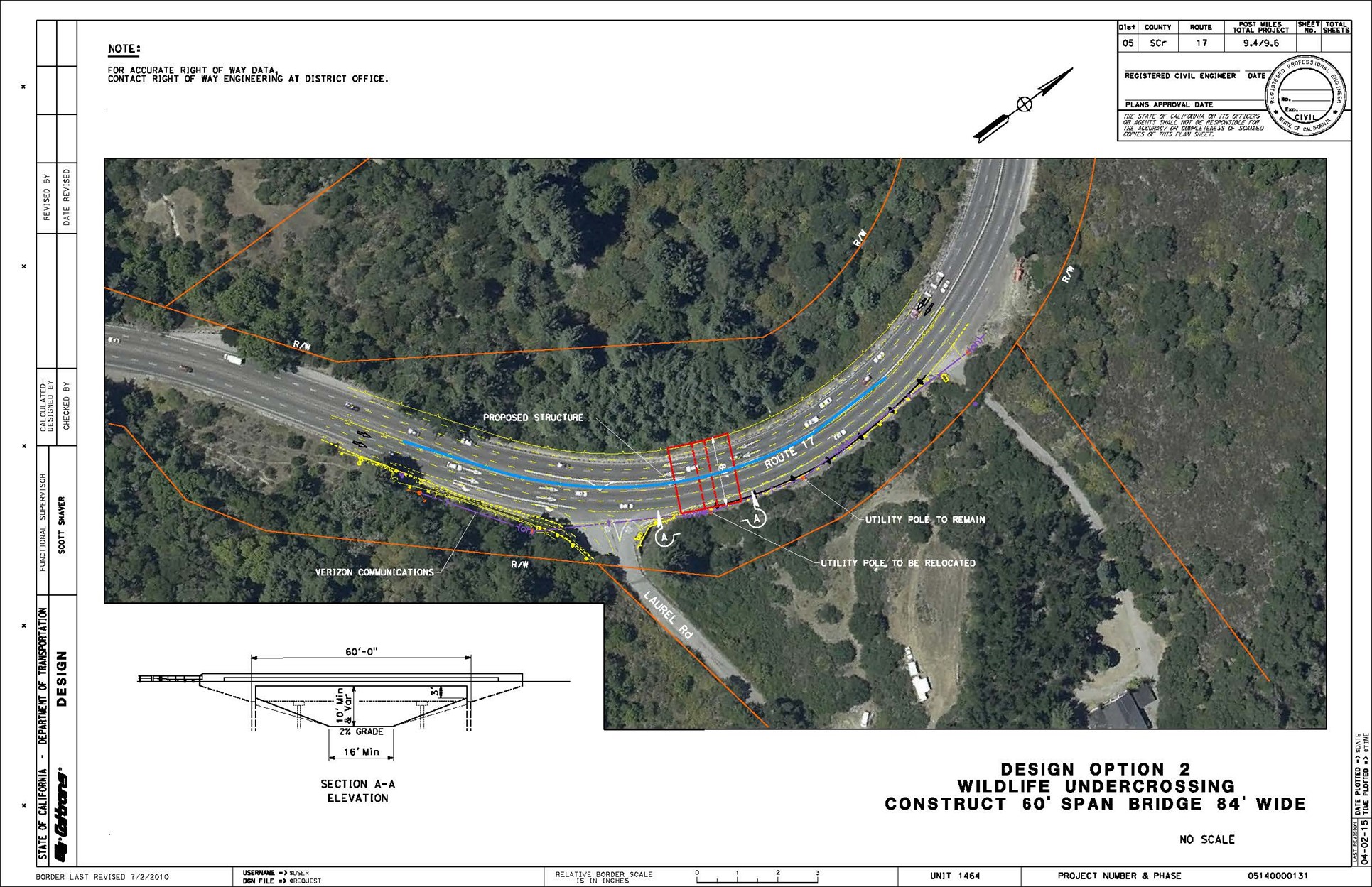
Laurel Curve is the kind of road that shows up in collision databases: a winding county route through oak woodland and grassland where deer, coyotes, bobcats, and the occasional mountain cat try to cross between dusk and dawn. The wildlife crossing we designed there is rightly celebrated as a safety win and a habitat connectivity project. But the reason I keep talking about it in IPM meetings is that it is also a pest-management decision.
The connection is rodents. When a road fragments a landscape, the predators that control rodent populations — coyotes, bobcats, raptors, snakes — stop crossing as freely. Rodents, which are far less road-shy, keep moving. The result is a predator deficit on one or both sides of the road, and a rodent surplus that shows up in damaged restoration plantings, gnawed irrigation lines, and public complaints about squirrels in structures.
A wildlife crossing restores that predator traffic. Within two seasons of the Laurel Curve underpass opening, motion-camera data showed coyotes and bobcats using it regularly. That matters for rodent control more than any bait station could. A coyote family can remove hundreds of rodents from a landscape in a season. A bobcat is a specialist on voles and ground squirrels. These are not symbolic benefits. They are measurable reductions in the pest pressure that otherwise drives agencies toward chemical control.
The design itself is IPM-friendly in ways that are easy to miss. The crossing is wide, has natural substrate, and is flanked by restored native plantings rather than mowed turf. Native vegetation supports the insects and small mammals that feed raptors and snakes. It does not concentrate rodents unnaturally the way a bird feeder or a compost pile might. It keeps the food web intact across the corridor.
We also made sure the fencing that funnels animals toward the crossing was low enough to let smaller predators pass and high enough to keep deer from jumping into traffic. The wrong fence can turn a crossing into a barrier. The right fence turns the road itself into a filter that protects both wildlife and the ecological services wildlife provides.
Integrated Pest Management is supposed to ask what the least disruptive control is. Sometimes the answer is a pesticide. More often, in a landscape like ours, the answer is a structure that lets predators do what they already do well. Laurel Curve is a wildlife crossing, a road-safety project, and an IPM intervention. The best projects usually are all three.