IPM as Collaboration, Not Control
Integrated Pest Management is usually sold as a smarter way to control the land. It is more useful, and more accurate, to describe it as a way for people to collaborate with the land instead.
Kyle D. Peczkowski
Board Certified Master Arborist & Urban Forester
The textbook definition of Integrated Pest Management is a hierarchy of interventions — cultural, biological, mechanical, chemical — ordered by risk and applied only when monitoring thresholds are exceeded. It is a useful definition for a training slide. It is not what IPM actually is in the field.
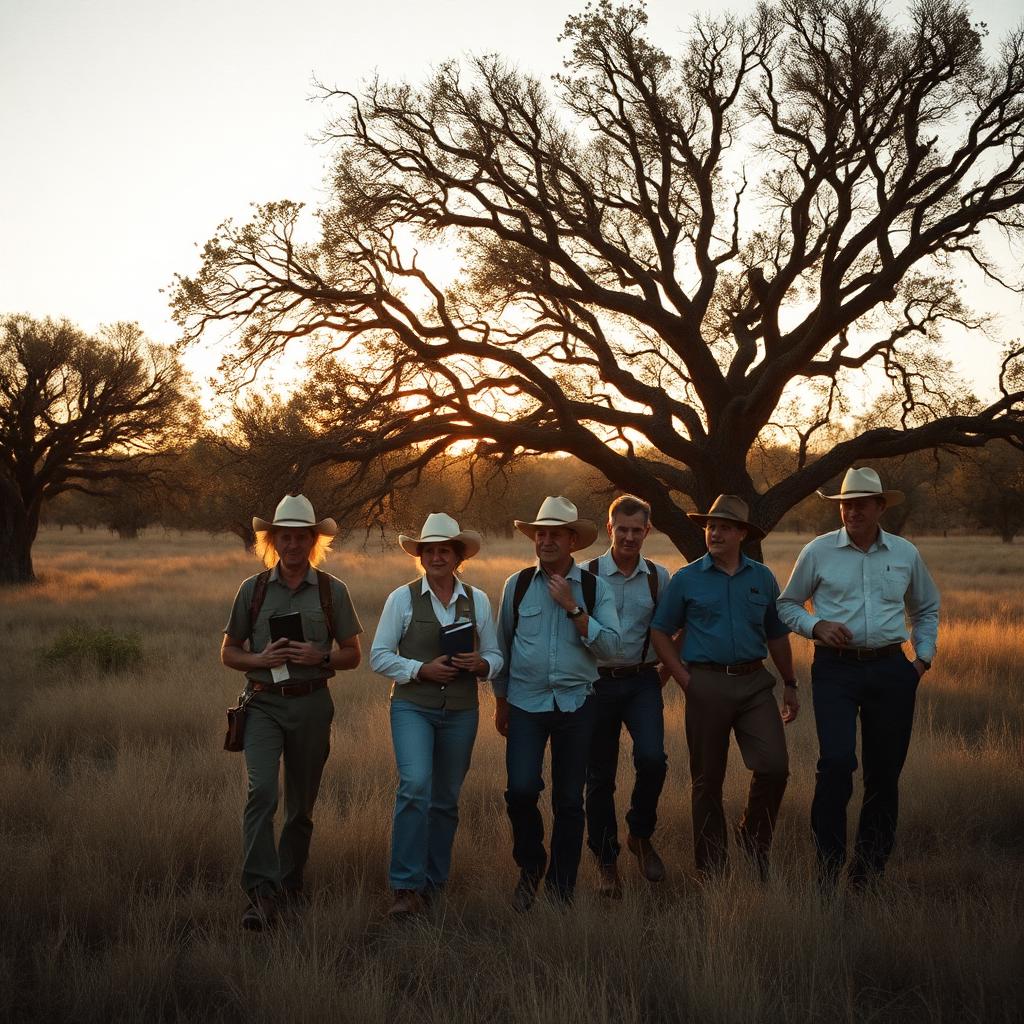
What IPM actually is, in the field, is a working agreement between people and a piece of land. The rancher who agrees to shift a squirrel control action outside the burrowing owl nesting window. The public works crew that stops broadcast-spraying oak-woodland edges. The homeowner who lets a lacewing population build in the roses before reaching for a spray. Each of those is a small negotiation, and the sum of the negotiations is the program.
The framing matters because 'control' presumes the land is an adversary and the goal is dominance. That framing is why so many pest programs fail on a long enough time horizon — you cannot dominate an ecosystem, and every attempt teaches the system to resist. 'Collaboration' presumes the land has its own agenda, that the agenda is usually compatible with ours if we bother to understand it, and that the practitioner's job is to find the compatible path.
This is not soft language for the same technical work. It changes what you measure. Under control-framed IPM, success is a low pest count. Under collaboration-framed IPM, success is a stable, self-regulating system that no longer requires the intervention. The first is a metric you have to keep re-earning every season. The second is a metric that lets you eventually walk away.
The best IPM practitioners I know talk about their sites the way good managers talk about their teams — with specificity, patience, and a working knowledge of what each member is trying to do. That is the model. The chemistry is the last five percent of the job.