Heritage Trees as Outdoor Classrooms
The oldest trees on a school campus can teach more than any textbook. Here is how we are using heritage trees to connect students with local ecology, history, and stewardship.
Kyle D. Peczkowski
Board Certified Master Arborist & Urban Forester
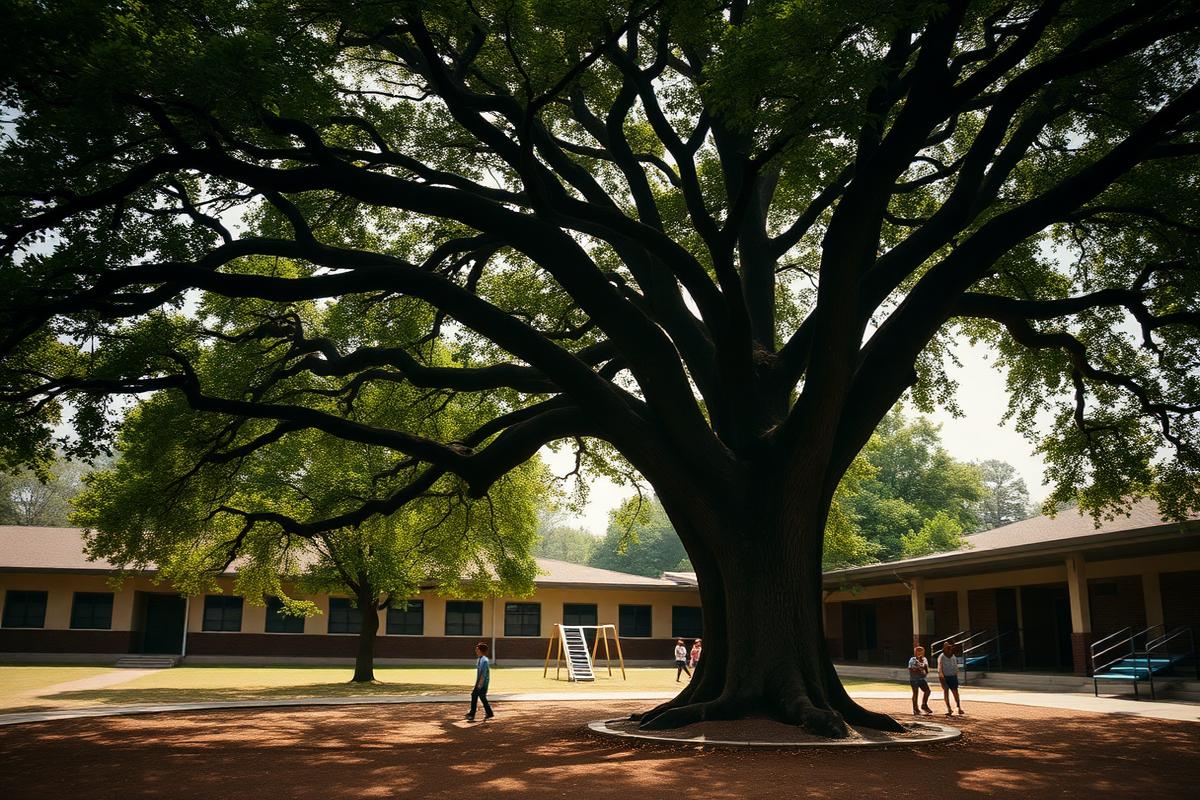
There is a coast live oak on a middle school campus in our county that was already mature when the school was built in 1962. It has shaded generations of students, survived a cafeteria expansion, and dropped acorns through three roof replacements. It is also one of the best outdoor classrooms we have.
Heritage trees on school grounds are living anchors. They connect students to the place they live in ways that slides and worksheets cannot. A 200-year-old tree was here before the town, before the school, before most of the families who now send their children there.
We have been working with teachers to build curriculum around these trees. Students measure the trunk, estimate age, identify wildlife, and track seasonal changes. Older students research the history of the land and write stewardship plans.
The trees also teach loss. One campus lost a heritage valley oak to root rot last year. The students planted a replacement nearby and wrote a short ceremony for it. That is a different kind of lesson, but an important one.
Protecting heritage trees on school campuses is not just about preserving old trees. It is about giving students a relationship with something older and bigger than themselves.