Grazing is IPM and a food system. Why we need to lean in, not back out.
Well-managed grazing is one of the most effective invasive-plant and fine-fuels management tools available in California, and it produces food while it works. The county's current direction — pulling grazing off working parkland — is the wrong turn.
Kyle D. Peczkowski
Board Certified Master Arborist & Urban Forester
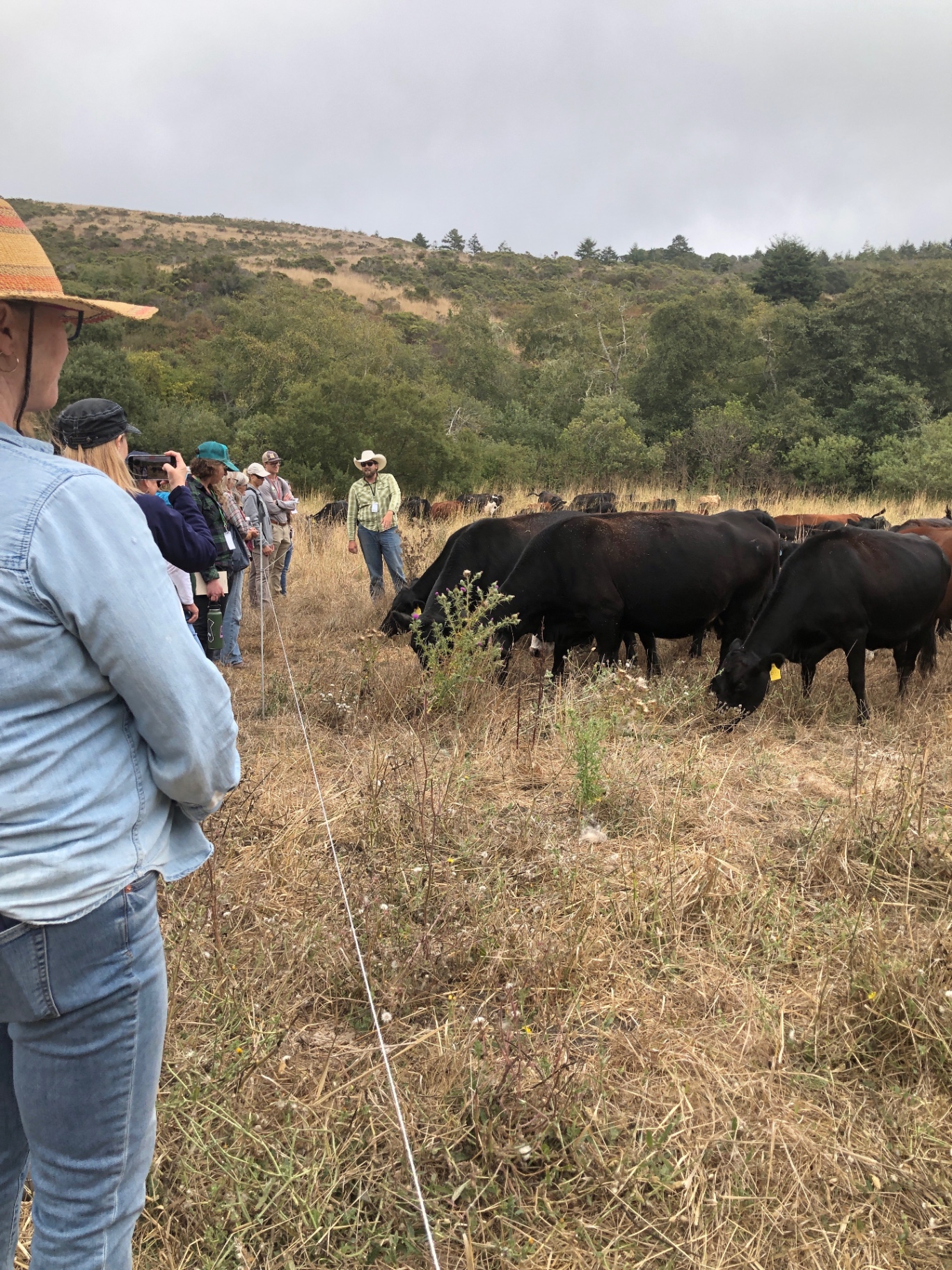
There is a strange split in how Santa Clara County talks about grazing. In the fire program, everyone agrees that fine-fuels reduction on hillsides is a top-tier priority and that mechanical treatment at scale is unaffordable. In the ecology program, everyone agrees that invasive annual grasses — wild oat, ripgut brome, medusahead — are the dominant threat to native perennial grassland recovery. And in the food-system program, everyone agrees that regional food resilience matters and that shortening supply chains between working landscapes and local eaters is a good thing.
And yet, when the county's own working landscapes come up in park planning meetings, the direction has been to pull grazing out. It is treated as a legacy nuisance from the ranching era rather than as what it actually is: an integrated pest management tool that also produces food.
Consider what a well-run grazing operation on county parkland actually does, in the vocabulary the rest of the county already uses.
As IPM: cattle and sheep selectively remove annual grass biomass at exactly the phenological window — late spring, before seed set — when annual grass competition most disadvantages native perennial seedlings. That is a targeted, mechanical, non-chemical intervention against an invasive species complex. If a contractor showed up with a machine that did the same thing, we would call it IPM without a second thought. The fact that the machine is a cow does not change the ecological function.
As fuels management: the same grazing pass reduces fine-fuel loading by 40 to 70 percent on treated pastures, measured in standing biomass at the start of fire season. On the wildland-urban interface parcels where CAL FIRE is trying to hold flame lengths under four feet during initial attack, that biomass reduction is the difference between a manageable fire and a running one. A goat contract to accomplish the same thing on a defensible-space parcel runs $1,200 to $2,000 an acre. A cattle grazing lease on the same parcel typically pays the county rather than costing it.
As food system: those animals become beef, lamb, and — increasingly, in the local grazier network — regional wool and hides sold into Bay Area food and craft channels. This is not a large-volume commodity operation. It is a small-volume, high-provenance food stream that closes the loop between a working landscape the county owns and the people who live around it. The carbon accounting is favorable when the alternative is trucking beef in from feedlots in the Central Valley or the intermountain West.
As soil ecology: hoof action on properly stocked pasture breaks surface crust, presses seed into contact, and delivers manure — a mobile nutrient and microbial inoculant — across the pasture on a rotation the operator manages. In the perennial-grassland restoration literature, this is a well-documented pathway back to a more diverse sward, provided the stocking rate and rotation are actually managed, not just permitted.
The bad grazing that gave grazing its reputation was set-stocking — put the cows out in April, take them off in November, come back next year. That practice degrades pasture, compacts soil around water points, and does not do the ecological work described above. It is also not the practice modern regenerative graziers use, and it is not what the county's remaining grazing leases look like when the operator is competent and the county's range staff is engaged.
The direction the county is drifting — quietly not renewing grazing leases, converting former range to unmanaged 'natural' open space, then discovering three years later that the parcel is now a solid stand of medusahead with a two-foot fuel bed — is the wrong direction. It is more expensive, worse for the native plant community, worse for fire outcomes, and it removes a small but real piece of the regional food economy.
The right direction is the harder one: rebuild the county's range program with staff who can write a proper grazing prescription, invest in the infrastructure that makes rotational grazing possible on parkland (water development, cross-fencing, load-out facilities), and treat the operators as contractors doing IPM and fuels work — which they are — rather than as a cultural relic being tolerated on the way out.
The framing shift is the whole game. Grazing is not something the ecology program has to make peace with. It is one of the ecology program's most powerful tools, and it comes with a food-system co-benefit that almost no other management practice offers. Turning away from resilient grazing is not neutrality. It is choosing a less effective, more expensive, less delicious version of the same landscape.