Grants Should Pay for Forest Health Reports and LiDAR, Not Just Tree Planting
Climate funding keeps paying for trees in the ground, but most agencies still lack the basic forest health data they need to spend that money wisely.
Kyle D. Peczkowski
Board Certified Master Arborist & Urban Forester
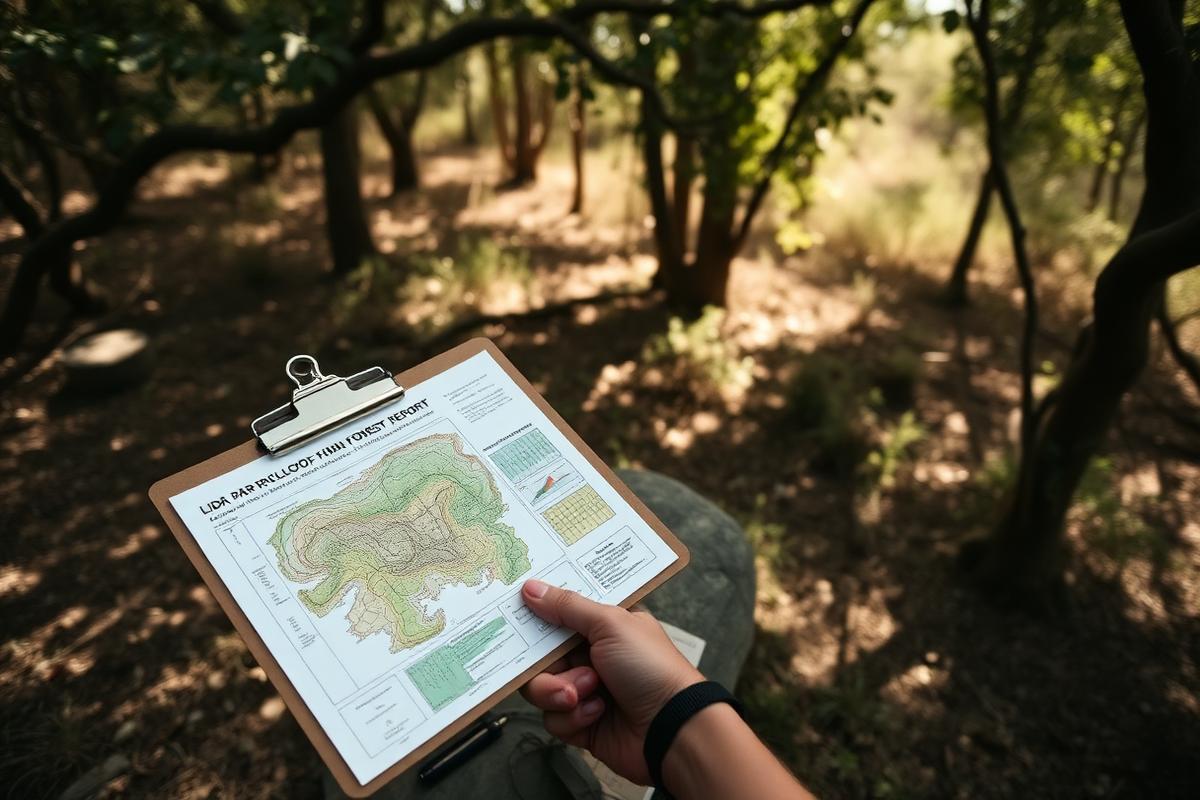
Every grant season, the same pitch circulates through public agencies: plant more trees to meet climate goals. It is an easy story to tell. Trees store carbon, cool neighborhoods, and look good in ribbon-cutting photos. Funders love it. Councils love it. The public loves it. But the strategy has a flaw that is becoming impossible to ignore: we are planting blindly into landscapes we do not understand.
The truth is that most cities and counties in California cannot tell you, with any precision, how healthy their existing urban forest is. They do not have a current species composition map. They do not know where the canopy is declining. They do not know which trees are at end-of-life, which are invasive liabilities, or which neighborhoods have soil conditions that will doom a new planting before the warranty expires. They are writing climate plans with tree targets and no inventory.
This is where grants should pivot. Instead of funding another round of installation, climate and natural resource grants should prioritize the unglamorous work that makes installation meaningful: comprehensive forest health reports, high-resolution LiDAR canopy surveys, and long-term monitoring infrastructure. These are not administrative luxuries. They are the foundation of every credible climate strategy.
LiDAR is the clearest example. Aerial LiDAR can map canopy height, cover, gaps, and biomass across an entire jurisdiction in a single pass. It reveals where heat islands are intensifying, where canopy is being lost to development, and where the existing forest is stressed before the leaves show it. With repeat flights, it gives you a trend line. Without it, you are managing from anecdotes and complaint-driven triage.
Forest health reports are the other missing piece. A proper report combines field data, pest and pathogen surveys, risk ratings, species diversity analysis, and maintenance backlogs into a single picture of condition. It tells you whether your oaks are declining from sudden oak death, whether your elms are carrying Dutch elm disease, and whether your most common street tree is a single pest outbreak away from catastrophic canopy loss. That information should precede any planting plan.
The political problem is that reports do not photograph well. A LiDAR deliverable is a hard drive and a map. A forest health report is a PDF. A tree planting is a shovel, a child, and a photo op. Grant programs are biased toward visible outputs, and that bias is making our urban forests less resilient. We are celebrating inputs while ignoring outcomes.
Funders can fix this by changing what they reward. Require a current canopy assessment as a condition of planting grants. Fund LiDAR acquisition as a standalone climate investment. Pay for multi-year monitoring instead of one-day installation events. Give agencies room to spend money on knowledge before they spend it on trees. The most climate-effective grant may be the one that produces no new trees at all.
There is also an equity dimension. Tree planting programs often concentrate in the easiest places to plant: wide parkways, new developments, affluent neighborhoods with established stewardship. Without data, agencies miss the canopy-deficient, high-heat, low-resource areas where trees would matter most. LiDAR and health reporting make those disparities visible and force grant dollars to follow need rather than convenience.
Some agencies are already moving this way. Santa Clara County and a handful of partners have begun treating canopy assessment and forest health reporting as core climate infrastructure. The goal is not to stop planting. It is to plant the right tree, in the right place, for the right reason, with the resources to keep it alive. That requires knowing the forest you already have.
The next generation of urban forestry grants should ask a different question. Not how many trees did you plant, but how much did you learn about the forest? Did you map it? Did you assess its health? Did you monitor survival? Did you adapt? If the answer is no, then the climate benefits you are claiming are mostly guesswork. It is time for grants to fund the intelligence that makes tree planting worth doing.