From Forest to Fixture
A Reclaimed Wood Procurement and Design Policy for Santa Clara County Parks.
Kyle D. Peczkowski
Board Certified Master Arborist & Urban Forester
A Reclaimed Wood Procurement and Design Policy for Santa Clara County Parks
Purpose
Santa Clara County Parks manages thousands of acres of forestland and routinely removes trees because of storms, wildfire mitigation, disease, trail improvements, public safety needs, and natural forest succession. Many of these trees contain valuable timber that can be reclaimed and transformed into long lasting materials for projects throughout the park system.
This policy establishes reclaimed park timber as a preferred material source for construction, renovation, interpretation, and visitor infrastructure whenever technically feasible and appropriate. The purpose is to reduce waste, strengthen sustainable practices, preserve the identity of each park, and create facilities that are directly connected to the landscapes they serve.
Policy Statement
When trees are removed from County Parks through approved management activities, the material should be evaluated for potential recovery and reuse. Reclaimed lumber from County forests should be considered before purchasing new commercially sourced wood for park projects.
While reclaimed wood may not be suitable for every structural application due to engineering, code, or durability requirements, it should be incorporated wherever practical. Appropriate uses include interior and exterior finishes, siding, decking, benches, railings, doors, window trim, furniture, interpretive features, trailhead kiosks, signage, and other visible elements where the character and history of the material can be experienced by visitors.
Design Philosophy
The materials used to build a park should whenever possible reflect the landscape of that park.
A structure built from locally harvested trees carries a connection that cannot be replicated by imported materials. The wood itself becomes part of the visitor experience. A sign, bench, cabin, or building element made from a tree that once grew within the park tells a story before a visitor reads a single word.
Establishing a Reclaimed Timber Program
Santa Clara County Parks should establish a coordinated reclaimed timber program that treats removed trees as a long term resource rather than a waste product.
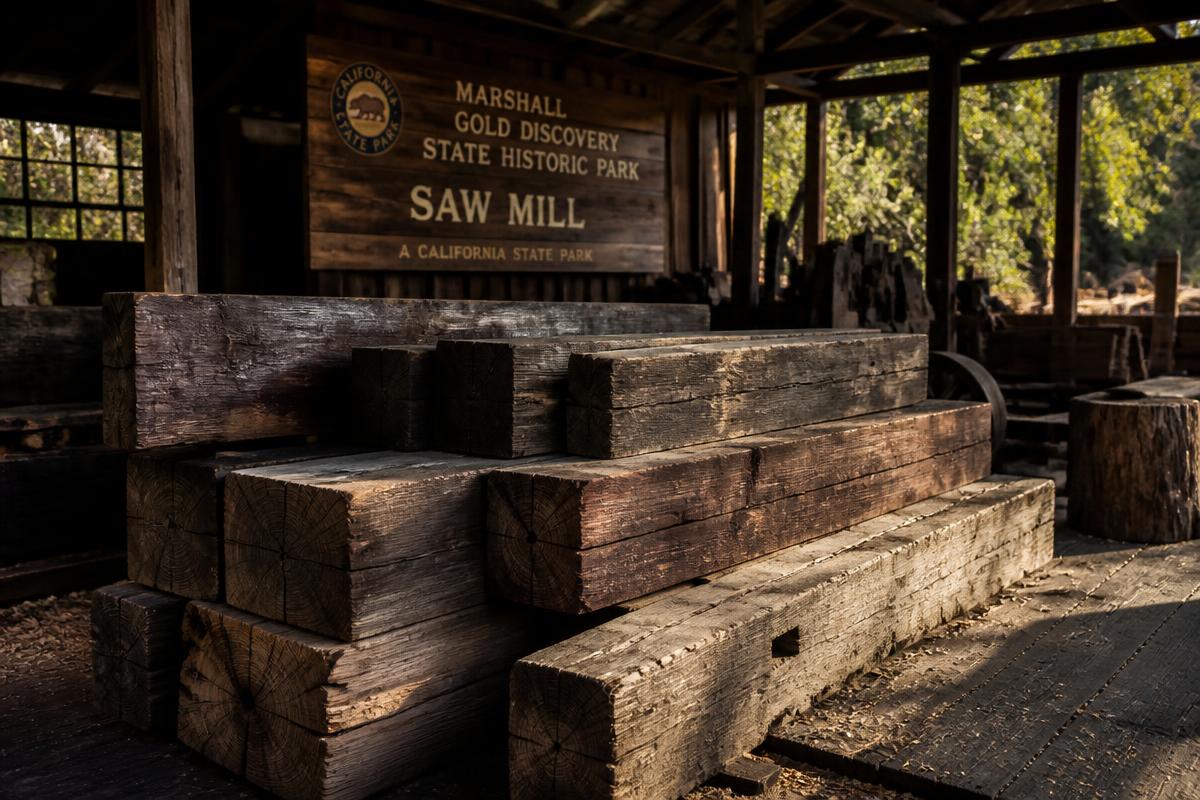
Trees removed through normal park management activities should be evaluated by qualified staff, documented by species and origin, and processed through the County sawmill when appropriate. Lumber should be milled, dried, stored, and cataloged so that it can be matched with future construction and renovation needs.
This approach would create a working inventory of park grown materials that can be used strategically throughout the park system.
Integration into Capital Projects
All new construction and renovation projects, including visitor facilities, overnight accommodations, maintenance buildings, historic structure improvements, trail amenities, and public gathering spaces, should evaluate opportunities to incorporate reclaimed County lumber during the design process.
Project teams should consider the availability of reclaimed material, appropriate applications, and opportunities to highlight the origin of the wood. When reclaimed lumber is not incorporated despite availability, the project should document the technical or practical reasons.
Demonstration Projects
Projects such as the Mount Madonna glamping cabins provide an opportunity to demonstrate the value of this approach. Cabins, furnishings, interpretive features, and landscape elements could incorporate wood harvested from the surrounding park, creating a direct relationship between the visitor experience and the land itself.
Similar opportunities exist throughout the park system through building renovations, visitor centers, picnic shelters, trailhead improvements, bridges, benches, and educational exhibits.
Interpretation and Public Engagement
Whenever reclaimed County lumber is incorporated into a public project, the story of that material should be shared with visitors. Interpretive elements can explain the species of tree, where it grew, why it was removed, how it was processed, and how it continues to serve the park.
This transforms infrastructure into an educational opportunity and allows visitors to understand forest management as a cycle of care, renewal, and reuse.
Benefits
A reclaimed timber policy would support environmental stewardship by reducing waste, lowering transportation impacts, and extending the useful life of trees removed through responsible forest management.
It would provide financial benefits by creating value from materials already owned by the County, reducing reliance on purchased lumber, and maximizing existing milling capabilities.
Most importantly, it would strengthen the cultural identity of Santa Clara County Parks by creating places that are physically connected to the landscapes they protect.
Vision
A visitor staying in a Mount Madonna cabin could sleep beneath beams made from trees that once grew on the same mountain.
A bench overlooking a valley could be crafted from an oak that stood there for generations.
A trailhead sign could introduce visitors using lumber harvested during the restoration of the very forest they are about to explore.
The forest would not simply surround our parks. It would continue to shape them.
That is stewardship made visible.