Connecting County Parks to the Salad Bowl of the Country
The oak savannas of Santa Clara County's regional parks share a fence line with one of the most productive agricultural landscapes on Earth. The two systems have been managed as if they were strangers. They shouldn't be.
Kyle D. Peczkowski
Board Certified Master Arborist & Urban Forester
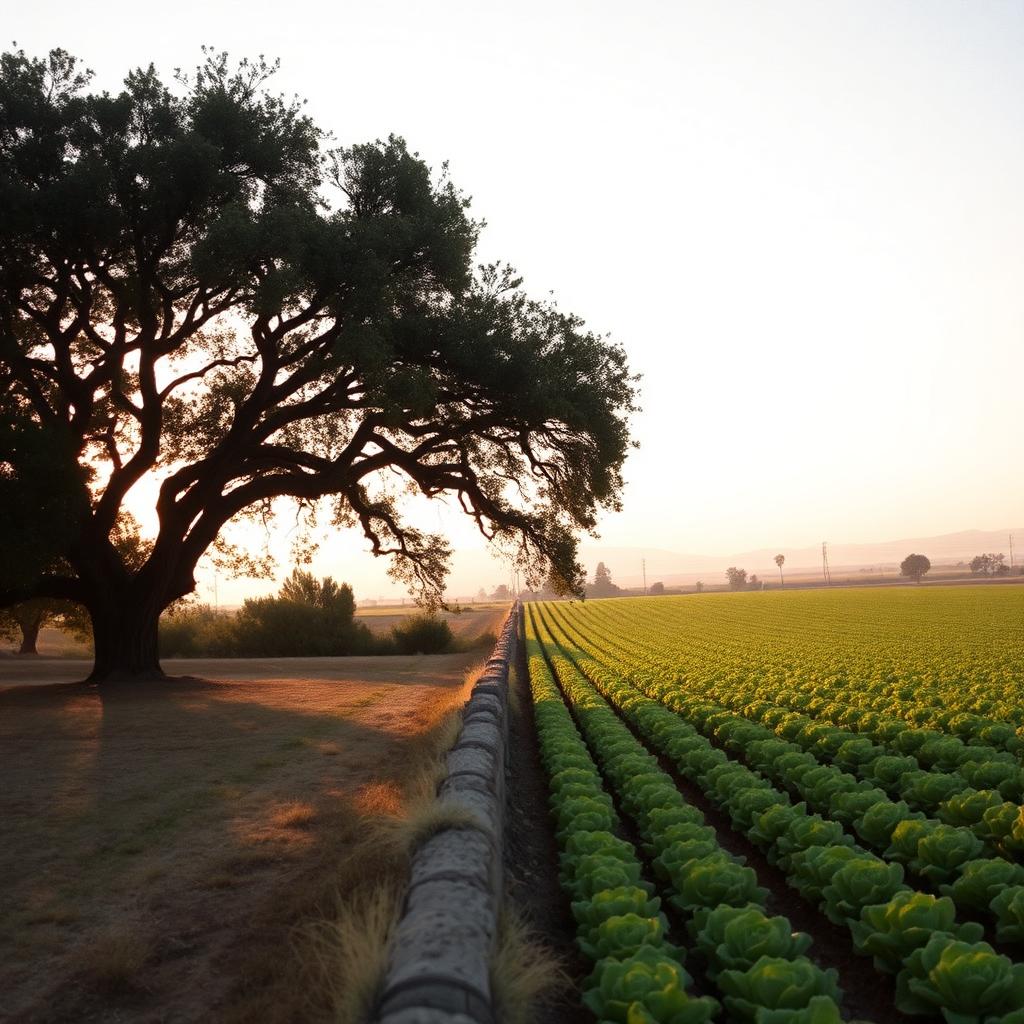
Drive south out of San Jose on 101 and within forty minutes the landscape does something that almost nowhere else in the world does. On one side of the fence line: oak-studded regional parkland — Coyote Lake, Henry Coe, Calero, Anderson — hundreds of thousands of acres of savanna, chaparral, and riparian corridor managed as habitat. On the other side of the fence line: the northern edge of the Salinas Valley, the salad bowl of the country, growing something like 70% of the leafy greens consumed in the United States.
The two systems have been managed for a century as if they had nothing to do with each other. Park staff manage for habitat and recreation. Grower operations manage for yield and food safety. The fence line is the end of both conversations. It shouldn't be.
The park side of the fence provides ecosystem services the agricultural side depends on and doesn't pay for: aquifer recharge in the winter rains, cool-season pollinator populations that move down into orchards and row crops during bloom, raptor populations that reduce rodent pressure on field margins, and — critically — a functional native predator community that keeps ground squirrel and vole populations from erupting into the fields.
The agricultural side, in turn, is the reason the park side has the political constituency it does. Every open-space bond measure in this county in the last thirty years has passed in part because South County voters — many of them working in or adjacent to agriculture — understand that the hills behind the fields are part of the same working landscape. Break that constituency and the parks lose their funding base.
The management integration that this argues for is not radical. It is a handful of specific practices. Coordinate ground squirrel management on the park boundary so grower field margins are not the only pressure point (this is the topic of a whole other essay — bluntly, the answer is raptor perches and burrow gassing on the park side, not more anticoagulant rodenticide on the ag side, because the anticoagulants are what took out the raptor population in the first place). Coordinate prescribed fire scheduling so smoke management doesn't hit a leafy-greens harvest window. Share hydrology data across the fence line so aquifer recharge estimates from the park watersheds can inform grower irrigation allocations. Coordinate hedgerow and beneficial insect corridor plantings so pollinator movement between the two systems is a designed feature, not an accident.
None of this requires either side to give up its primary mission. Park staff still manage for habitat. Grower staff still manage for yield. The integration happens at the edges — which is where, in a landscape like this one, most of the ecology actually lives.
The larger point is that the fence line is a management convention, not an ecological boundary. The soil microbes, the water, the pollinators, the raptors, the small mammals, and the fire don't know which parcel is APN whatever and which parcel is a Regional Park. Treating the two sides of the fence as one working landscape — with two different primary uses, coordinated at the boundary — is the direction the next generation of natural resource management in this county has to go. The salad bowl and the savanna are the same landscape. They should be managed like it.