Community Forestry Has Been Educating Our Residents Since 1994. What's Missing?
Three decades of tree planting events have built goodwill. They have not, on their own, built a constituency that understands what trees actually need.
Kyle D. Peczkowski
Board Certified Master Arborist & Urban Forester
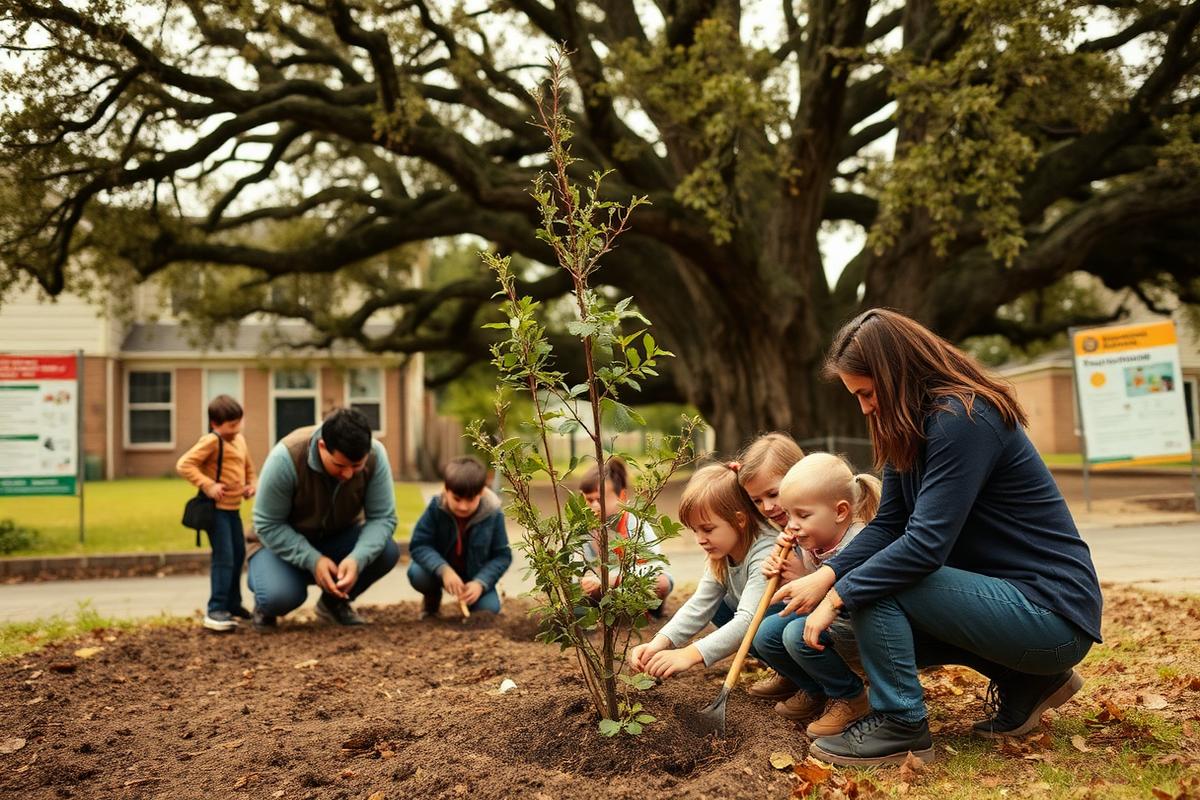
Community forestry in Santa Clara County has a proud history. Since 1994, volunteers have planted thousands of trees at schools, parks, and neighborhood events. Children who put their first shovel into the ground at those events are now adults with children of their own. The program has built relationships, celebrated Arbor Day, and left a real physical mark on the landscape.
It has also, in some ways, been teaching the wrong lesson.
The dominant message of community forestry for thirty years has been that planting a tree is the meaningful act. Show up, dig a hole, water the root ball, take a photo. The tree becomes a symbol of personal and civic virtue. What gets far less attention is the years of care that determine whether that symbol lives or dies.
The result is a public that loves trees but does not understand them. People want more canopy, but resist the pruning, watering, and infrastructure investment that make canopy possible. They mourn trees that fail, but do not connect those failures to the compacted soil or the two summers of neglect that caused them. They show up for planting day and disappear for establishment.
What is missing is the second half of the curriculum. Community forestry should be teaching stewardship, not just planting. Every event should include a follow-up commitment: a watering schedule, a mulch check, a pruning clinic, or a simple monitoring walk. The badge of participation should not be the hole you dug. It should be the tree you kept alive.
We are piloting that shift in a few county programs. New planting events come with a three-year adoption plan. Volunteers sign up for seasonal maintenance check-ins. Schools track survival rates as a science unit. HOAs receive a simple calendar instead of a certificate. The goal is to make the public as fluent in tree care as they already are in tree planting.
There is also a policy piece. Community forestry has educated residents, but it has not always educated decision-makers. A council member who attends a planting event should leave understanding that the real budget item is not the tree; it is the establishment contract. A superintendent who hosts an event should understand that school canopy goals require irrigation, not just enthusiasm.
The next thirty years of community forestry should not abandon the planting ceremony. Planting is joyful and it matters. But the program needs to grow up. A mature community forestry movement is one where residents know how to care for trees, advocate for their budgets, and hold the line when short-term pressures threaten long-term canopy. That is the education we have been missing since 1994.