Aligning CAL FIRE Prescribed Burns with County Stewardship Goals
A working memo. To better align wildfire management activities with the County's environmental stewardship goals, I recommend the following practices for all CAL FIRE prescribed burns on our jurisdiction.
Kyle D. Peczkowski
Board Certified Master Arborist & Urban Forester
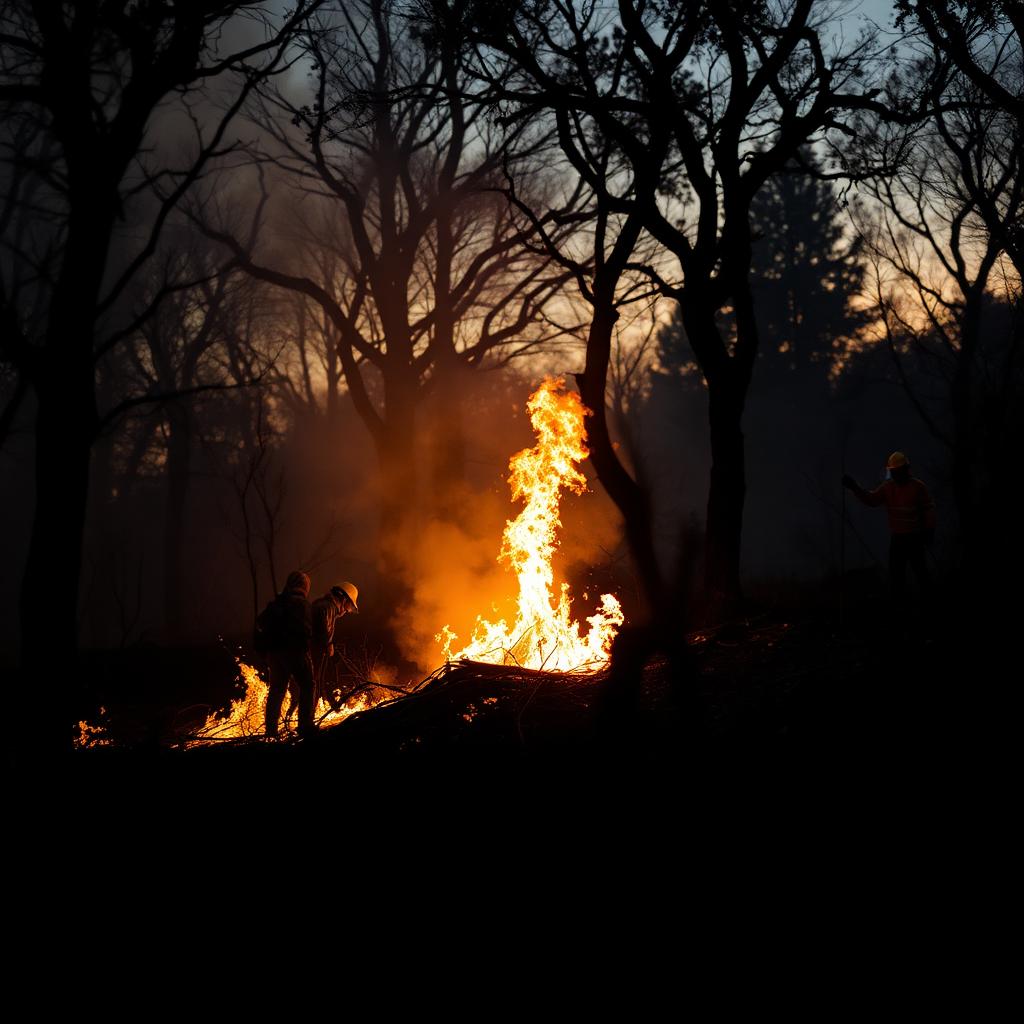
This piece began as an internal memo to our fire and stewardship partners. I am publishing it in its working form because the recommendations are boring, specific, and useful — the three qualities most likely to survive a change in personnel on either side.
First: pre-burn ecological reconnaissance. Every prescribed burn unit on County-controlled land should receive a botanical and wildlife survey within the twelve months before ignition, with specific attention to rare plants, active nest trees, sensitive amphibian breeding sites, and heritage oaks over 36 inches DBH. Findings should be mapped and shared with the burn boss before the burn plan is finalized, not after.
Second: protection of legacy trees. Any heritage oak, redwood, or bay identified in the reconnaissance receives a raked, cleared, and pre-wetted duff apron out to the drip edge. No exceptions for logistics, weather windows, or crew fatigue. The oldest trees on the landscape are the ones we cannot replace on any policy-relevant timescale, and a single lost heritage oak costs more in public trust than a whole season of burns earns back.
Third: fuel-treatment prescriptions that leave standing dead wood. The habitat value of snags for cavity-nesting birds, bats, and native bees consistently exceeds their fuel-loading concern in oak-woodland units. Absent a specific ignition risk to structures, snags should be retained, not felled to the ground as a matter of routine.
Fourth: burn timing that avoids ground-nesting bird and pollinator windows. In our system that generally means completing spring burns before April 1, or deferring to a fall window after September 15. The narrow shoulder seasons are worth the scheduling difficulty.
Fifth: post-burn monitoring, standardized and shared. Photo points, vegetation transects, and mortality surveys at one, three, and five years. Data lodged in a jointly accessible archive. This is where most partnerships quietly break down; it is also where the honest learning happens.
None of this is a critique of CAL FIRE, whose crews do dangerous, skilled work under conditions the public rarely sees. It is an argument that stewardship goals and wildfire goals are compatible on the same acre only if we say so out loud, in writing, before the drip torch touches the duff.